
Dr. Agyeman-Rawlings commenced her tour at the Council for Scientific and Industrial Research (CSIR) head office. Meeting with the Council’s management, lead scientists, and administrative staff, the Minister emphasized the urgent need to transition scientific breakthroughs out of research laboratories and into commercially viable, market-ready applications.
“Science is not abstract. We want the public to see, understand, and benefit from what our researchers achieve,” Dr. Agyeman-Rawlings stated during the engagement. “It is time to scale research outputs into economically viable solutions that directly address our local challenges—from land remediation and water purification to agricultural productivity and sustainable infrastructure.”

Key Highlights at CSIR:
Commercialisation & Economic Impact: The Minister urged CSIR to establish robust frameworks for commercialising research outputs to drive economic growth and generate alternative revenue streams.
Addressing Talent Retention: Responding to remarks by CSIR Council Chairman, Ing. Mark Taylor, regarding staff retention, the Minister assured researchers of MEST’s commitment to strengthening institutional frameworks and working environments.
Public Engagement: Calling for renewed efforts to popularize STEM, Dr. Agyeman-Rawlings highlighted the need to make scientific innovation accessible and inspiring to youth.
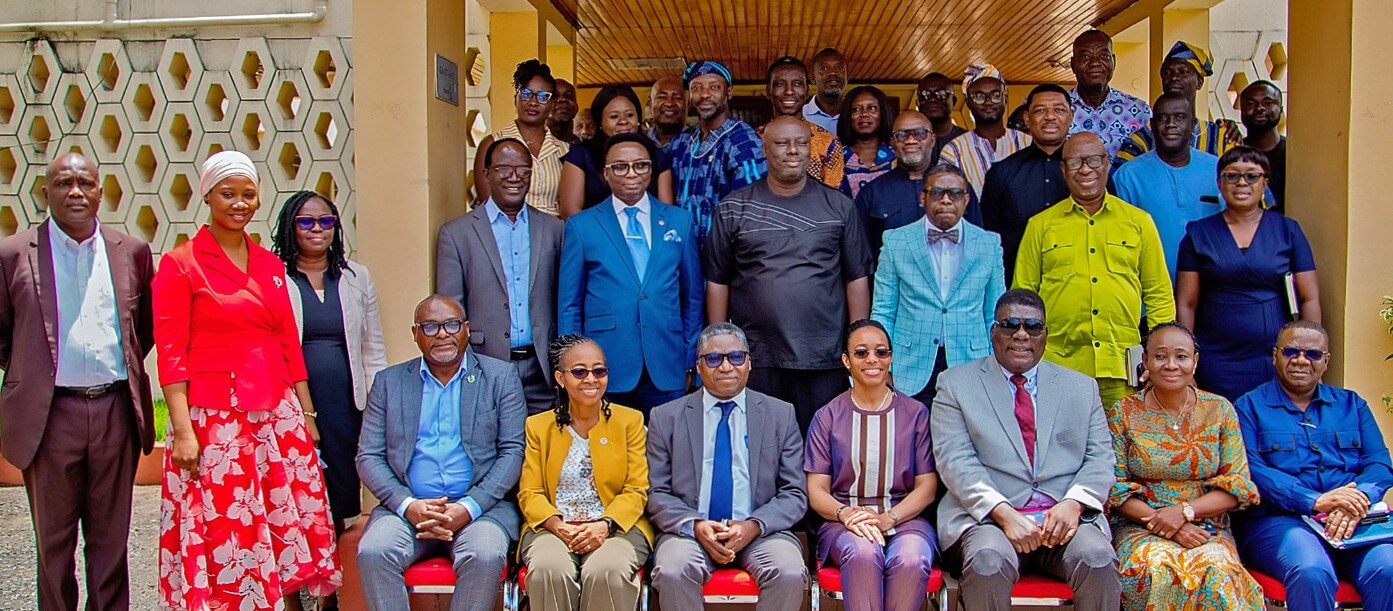
Continuing her working visit, the Minister proceeded to the Secretariat of the Electrical and Electronic Waste Management Fund (E-Waste Fund) to review operations, assess regulatory compliance under the Hazardous and Electronic Waste Control and Management Act (Act 917), and outline measures to address Ghana’s expanding electronic waste stream.
During discussions with management, Dr. Agyeman-Rawlings charged the Secretariat to look beyond conventional electronics and prepare proactively for waste generated by emerging green technologies.
“As Ghana accelerates its transition toward renewable energy and clean mobility, we must anticipate the end-of-life management of green technologies,” Dr. Agyeman-Rawlings asserted. “Solar panels, lithium-ion energy storage batteries, and electric vehicle (EV) components will soon form a massive part of our waste landscape. The E-Waste Fund must establish robust collection, recycling, and safe disposal frameworks today so that our clean energy transition does not turn into an environmental hazard tomorrow.”
Key Highlights at E-Waste Fund Secretariat:
Green Technology Waste Strategy: The Minister directed the Secretariat to formulate a national roadmap specifically designed for managing spent solar equipment, EV batteries, and renewable energy hardware.
Sector Formalisation & Infrastructure: Discussions focused on accelerating the integration of informal e-waste workers into structured systems, expanding eco-friendly recycling capacity, and improving public health safety.
Public Awareness: The Minister stressed the need for nationwide educational campaigns targeting households, corporate entities, and importers on proper e-waste disposal practices.

The familiarisation visits to CSIR and the E-Waste Fund Secretariat mark the initial leg of planned engagements across MEST departments and agencies in the capital. The Minister reaffirmed the Ministry’s continuous policy support, oversight, and resource alignment to enable all sector agencies to fulfill their respective mandates effectively.